Sell what is
in the pan.
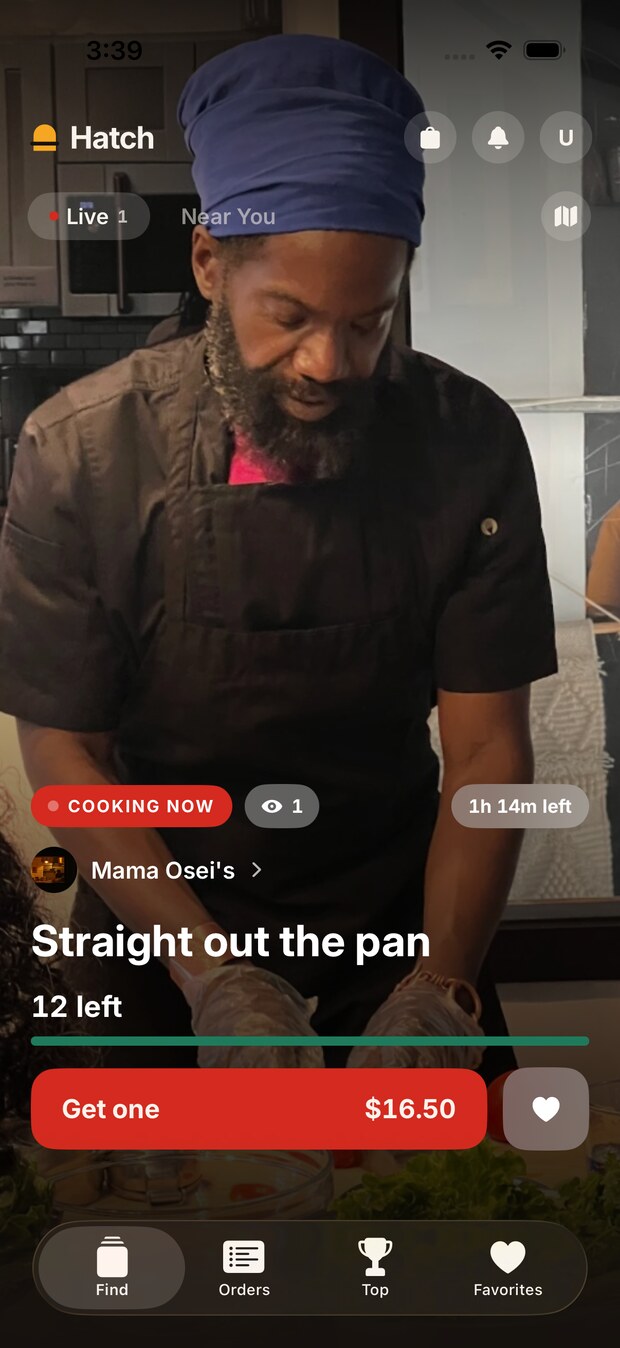
Open a window, go live while you cook, and watch twelve portions sell out in forty minutes. No commission on your food. No approval queue. You can be taking card payments this afternoon.
The fastest way to sell food you already make.
Going live is the sale
A drop is a decision made in about four seconds. People watch the count fall, tap once, and it is theirs. You are not writing a listing — you are cooking, and the selling happens next to you.
Scarcity you do not have to fake
Every other platform manufactures urgency. You genuinely have twelve portions. The count on your card is a fact, it only moves when somebody actually pays, and it closes itself when the pan is empty.
Found by people who were not looking for you
Your followers already know you. The Street, the leaderboard and the Hatchery exist to put you in front of the ones who do not — which is the only thing a marketplace is actually for.
We are not going to show you somebody else’s good month.
Hatch is new, so there are no seller stories to put here yet, and we are not going to invent any. What we can do is show you the arithmetic, run by the same code that charges a real order. One drop, twelve plates at $15.00.
$180.00 of food, less $9.48 of card processing at cost. Hatch takes none of it.
The same twelve plates, minus a quarter of every one. That is $35.52 a night, on one drop.
That is it. The $2.00 Hatch fee is paid by the guest, on top of your price, and never comes out of what you are owed. Nothing from your tips.
Card processing is roughly 2.9% plus 30c, passed through at cost rather than marked up. Sales tax is collected from the guest and remitted by Hatch, so it is not part of your payout either. Run one drop a week for a year at these numbers and the difference against a quarter-commission platform is about $1847.04.
You have already built
this business.
We counted ninety of you in one afternoon. Named kitchens with logos, weekly schedules and pre-order deadlines, all running inside a form built for selling used furniture — one photograph, one price field, one text box.
So the menu becomes a picture nobody can order from. The price becomes bait: a dollar, five dollars, free, because a menu has no single price. The schedule becomes words inside the photograph. And the order becomes a phone number, which means the money leaves and there is no receipt, no rating, and nothing to build on.
You do not need to be convinced to start. You need somewhere to put it.
Open your window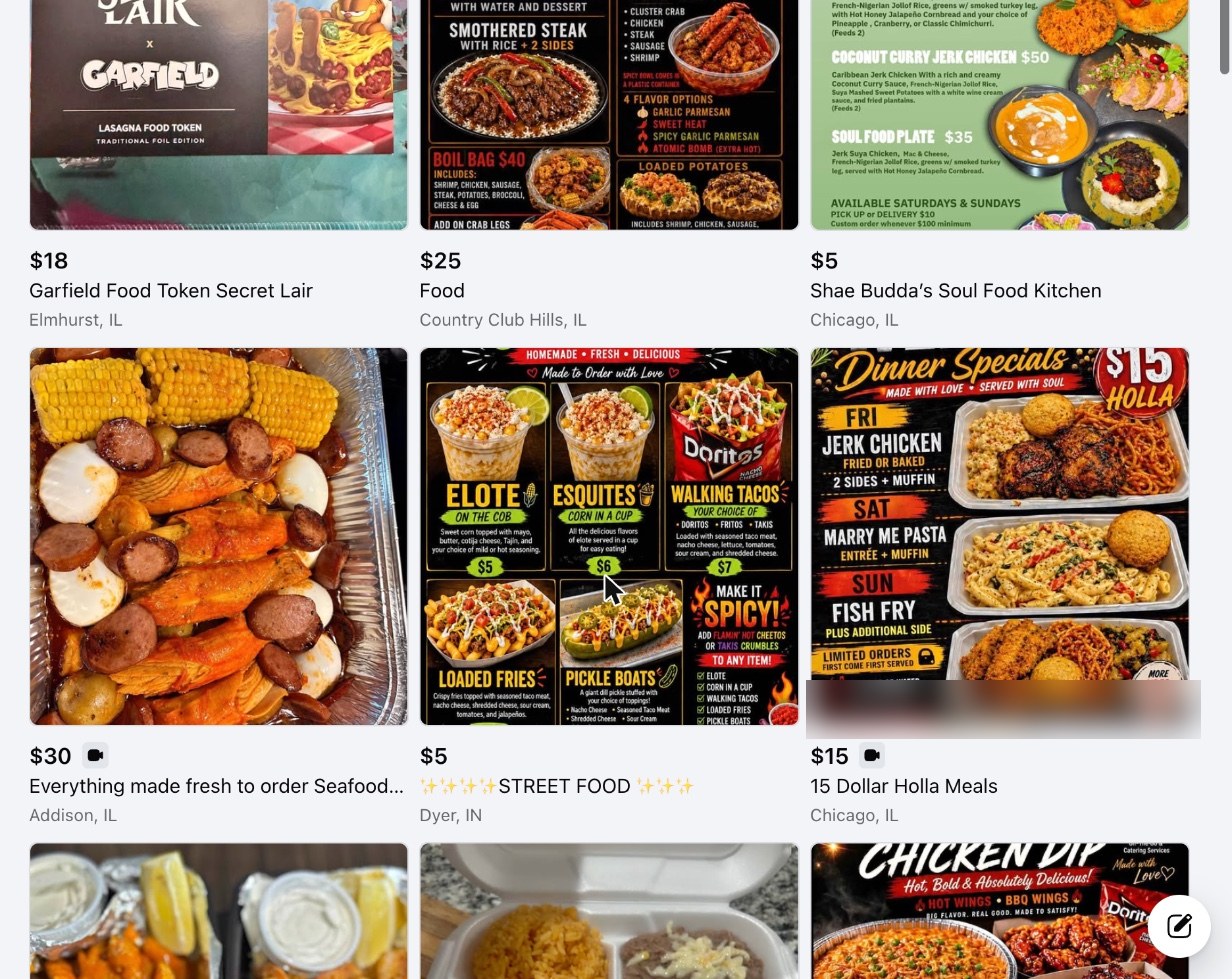
Everything a shop needs, and none of the parts you would have to buy.
Card payments
Stripe, in your own name. Money lands in your bank, not in ours, and payouts start once you have finished the setup.
Live drops
Pick a dish, say how many portions exist, open a window. Everyone who saved you gets told.
A real menu
Sections, photographs, sizes, add-ons, prep times, and prices that can actually be charged.
Your own page
A clip, a gallery and a story, so somebody deciding whether to buy from a stranger can see the room.
The Pass
Orders land on a rail with a sound. Accept, set an ETA, fire it, hand it over.
Ratings that mean something
Only a guest who actually bought can review, one per order, and you can reply.
Sales tax, handled
Collected from the guest and remitted by Hatch. It never touches your payout and you never file it.
Allergens and ingredients
Captured on every dish and shown before anybody buys, which is what the law asks for and what a guest deserves.
The Hatchery
A monthly competition per city, won by selling food to strangers. An order is a vote.
Before you open, the part nobody else will tell you
You are the seller, not us. What you may lawfully sell depends on your state and on whether you cook at home or in a licensed space, and the difference is large. In Illinois a home kitchen can sell a great deal — with no cap on what you earn — but it must be prepackaged and labelled, and meat, poultry, fish and most dairy are out. A truck or a commissary has no such limit. We will tell you which one you are and what it means for you before you list anything, because finding out afterwards is how people get shut down.
Open your window.
About five minutes to set up. No approval queue, no minimum, and no cut of your food.
Start selling