A street where anyone can cook.
Order from a menu like anywhere else — or catch a kitchen live, cooking and plating a set number of portions, and take one before they are gone.
Two ways to buy. Only one of them has a clock on it.
Most of Hatch works the way you already expect — a menu, a bag, pickup or delivery, whenever the window is open. Live is the other half, and it is the half nowhere else has.
Order from the menu
Browse the street, pick a kitchen, choose sizes and add-ons, and pay. Pickup or delivery by the kitchen itself. Prep times, allergens and ingredients on every dish, and a receipt that reconciles. The ordinary part, done properly.
Catch a drop
A kitchen opens a window while they are cooking, plating and packing a set number of portions — twelve, maybe twenty. You watch the count fall and take one in a single tap. When they are gone it closes itself. Nothing on that card is invented: the count only moves when somebody actually pays.
Look through the window first.
You are deciding whether to buy dinner from somebody you have never met, and your guard should be up. So every kitchen carries their own clip, their own photographs and their own story — the room, the hands, the packaging — and reviews that can only be left by a person who actually bought something. One per order. No exceptions.
Hatch does not inspect kitchens and does not pretend to. What it does is make sure you can see one before you buy from it.
Twelve portions.
Forty minutes.
A drop is a kitchen selling while they cook. You watch the number fall, tap once, and it is yours. Nothing on the card is invented: the count only moves when somebody actually pays, the crowd is people in the room with you, and it closes when the pan is empty.
How a drop works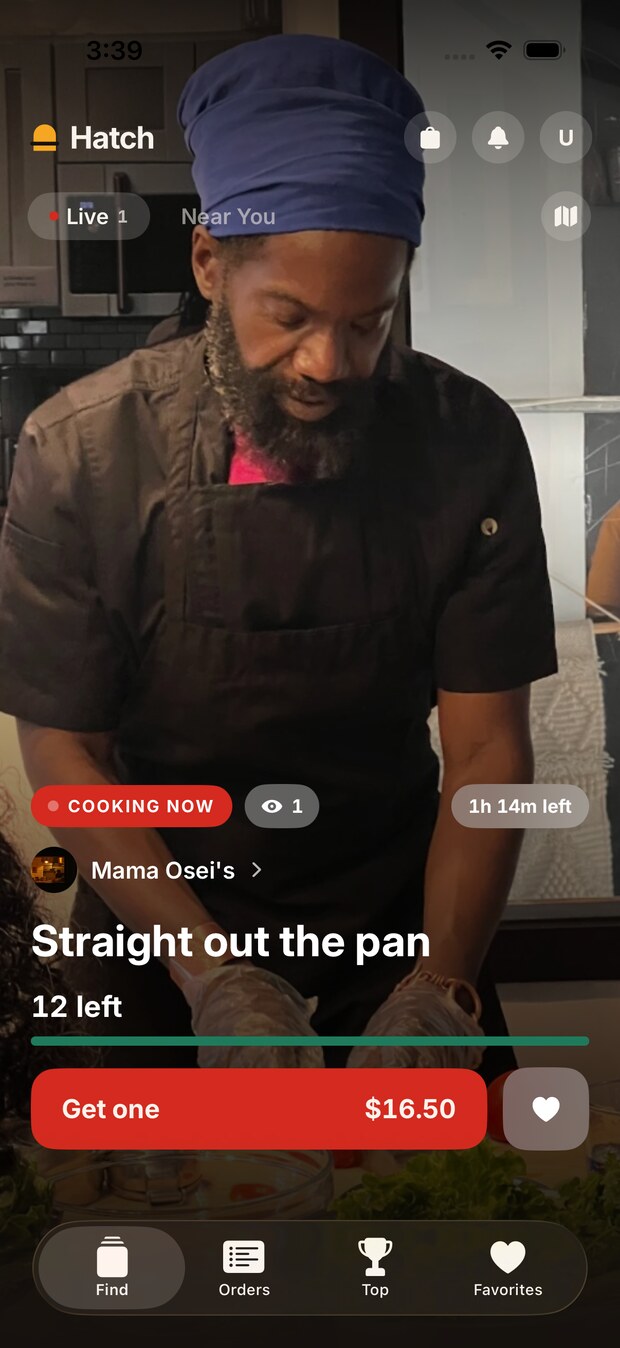
Every window is somebody’s first.
Home cooks, pop-ups, trucks, supper clubs, people who have been selling plates out of a group chat for two years. No approval queue and no minimum.

Anyone can hatch.
About five minutes to open a window, and you can be taking card payments this afternoon.
Open your window